How to spot a flood-damaged car: hurricane state trails & physical checks
Why flood cars ruin owners 4 months later
Saltwater and dirty flood silt wick upward inside copper wiring harnesses via capillary action. A flooded car may drive normally during a 10-minute test drive while green corrosion slowly destroys ABS control modules, CAN-bus gateways, and airbag squibs.
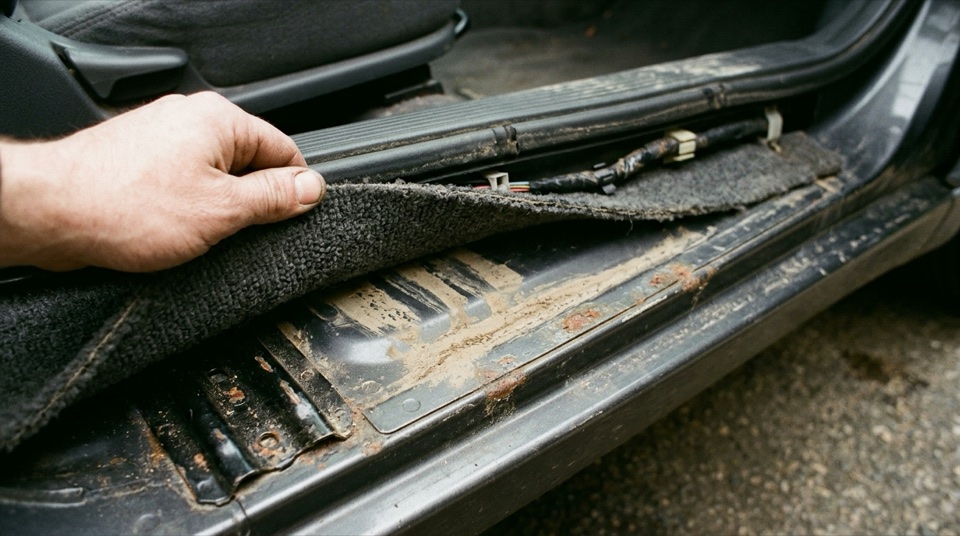
Every major US hurricane leaves behind tens of thousands of submerged vehicles—many uninsured or settled outside normal salvage channels and trucked inland to Ohio, Georgia, Virginia, Arizona, or Illinois within weeks. Here is how to catch flood corrosion even when the carpet smells like strong vanilla air freshener.
In this guide
Step 1: Trace hurricane-corridor history in the VIN timeline
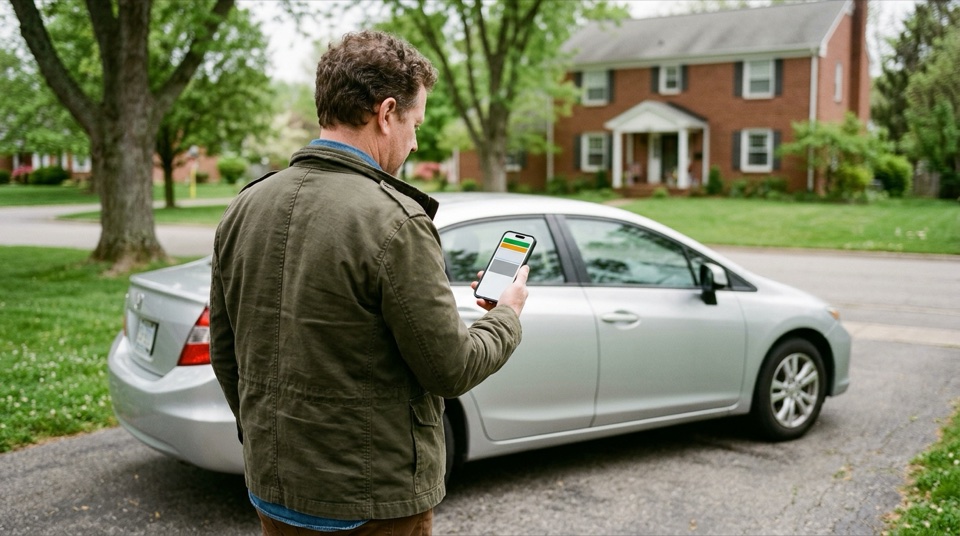
The quickest flood screening happens before you ever put on work gloves. If a clean-looking used SUV sitting in Charlotte, Dallas, Nashville, or Columbus spent last fall registered in Tampa, Fort Myers, Houston, or coastal New Orleans—especially if it changed owners quickly or paused registration for 3–6 months—treat it as high-risk until proven dry.
Check Florida & Coastal Flood Warning Rules →
See hurricane migration corridors, FL Certificate of Destruction laws, and NMVTIS flood branding gaps.
Step 2: 6 hiding spots reconditioners forget to detail
Flood flippers steam-clean seats, replace soggy carpet, and spray heavy ozone or fragrance bombs inside the cabin. They almost never disassemble these six hidden cavities:
| Hidden Cavity | How to Inspect | Flood Smoking Gun |
|---|---|---|
| Bare Seat Mount Bolts & Tracks | Slide front seat full forward and shine a flashlight beneath | Surface orange flash-rust or crusty tan silt packed into hex bolt heads and track grease |
| Seatbelt Webbing Full Extension | Pull driver & rear belts 100% out to the anchor spool | Horizontally stained tide line, stiff water-ringed weave, or mildew spots near the floor end |
| Trunk Spare Tire Well & Jack Foam | Lift the trunk mat and remove foam organizer | Damp silt residue in seam sealer joints or chalky white mineral dust on alloy spare hub |
| Under-Dash Steering Column & Fuse Box | Look straight up past the pedals with a flashlight | Flash rust on unpainted aluminum brackets, chalky green oxide on relay pins |
| Door Bottom Drain Holes & Speaker Grilles | Peek underneath lower door seams and pry rubber sill gasket up | Dried mud cakes trapped inside folded door-skin pinch welds |
| Fogged Headlights & Condenser Fins | Inspect tail lamp & headlamp corners closely | Water droplets, organic algae tint, or fine silt inside rear backup light housings |
Step 3: Electrical & OBD-II flood check
Switch the ignition to ON (engine off) and confirm every warning icon—ABS, SRS Airbag, Traction Control, Check Engine—illuminates cleanly and shuts off independently after start-up. Flood flippers often wire burned-out SRS bulbs in parallel with oil pressure lights or clear codes moments before you arrive.
Run a 20-second scan with any basic OBD-II reader showing permanent readiness monitors and historical module communication ("Lost Communication with Body Control Module / U-codes")—frequent U-codes across unrelated doors and seats scream water intrusion.
Common questions
Can a flood-damaged car still carry a Clean US title?
Yes, if the owner carried liability-only insurance with no comprehensive claim, or if a dishonest intermediary moved the car rapidly through states before an insurer brand settled into NMVTIS.
Is saltwater flooding worse than freshwater rainwater flooding?
Dramatically worse. Brackish coastal storm surge accelerates galvanic corrosion inside sealed aluminum connector pins, starter motors, and unibody rockers even months after drying.
Should you ever buy a flood-branded car?
For daily transportation, almost never—unless it is a documented mechanical-only project with full wiring replacement priced as a parts donor and backed by pre-repair auction photos.