Salvage vs. rebuilt title in the US: legal rules, insurance, and value hit
A Rebuilt inspection checks stolen parts—not craftsmanship quality
Most state DMV salvage inspections (such as California Brake/Light, NY MV-899, or Florida Salvage Rebuild) verify receipts to confirm parts were not stolen plus basic roadworthiness. They do NOT guarantee proper airbag sensors or unibody weld integrity.
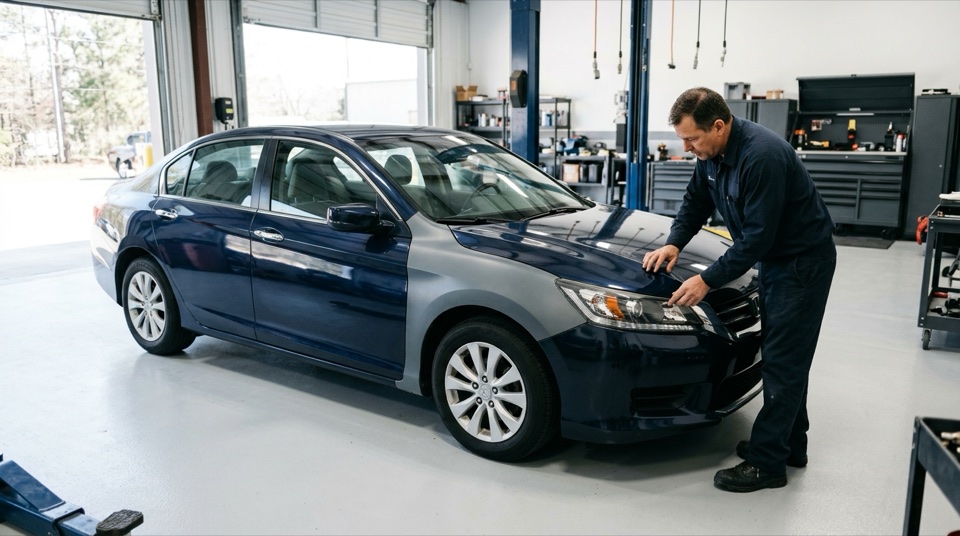
When an insurance adjuster declares a car a total loss, its clean title disappears—replaced by a Salvage title, and later a Rebuilt (or Prior Salvage / Revived Salvage) brand if repaired and inspected by the state. Knowing the gap between those three statuses—and checking the pre-repair crash photos—can save you thousands.
In this guide
Clean vs. Salvage vs. Rebuilt vs. Non-Repairable
US insurers declare a total loss whenever estimated repair cost plus salvage value meets or exceeds a state’s statutory Total Loss Formula (TLF) or percentage threshold—for example 75% of Actual Cash Value in New York, 80% in Florida, 100% in Texas, or TLF in California and Illinois.
| Title Status | Street Legal? | Can You Insure It? | Typical Market Discount |
|---|---|---|---|
| Clean Title | Yes nationwide | Full Liability + Comprehensive + Collision | 100% baseline retail value |
| Salvage Title | NO — cannot renew tags or drive legally | Cannot be insured for road use | Sold wholesale / auction project only |
| Rebuilt / Prior Salvage | Yes (after state DMV structural/anti-theft exam) | Liability easy; Collision/Comp restricted by some carriers | 20%–40% below clean retail value |
| Certificate of Destruction / Junk | PERMANENTLY OFF-ROAD (parts/crush only) | Never road-registerable in any compliant US state | Parts value only—walk away if offered for driving |
Review California & High-Volume Salvage Rules →
Learn how California Revived Salvage (REG 488C), Brake & Light certs, and CHP inspections work.
When a Rebuilt title makes sense—and when to run
Not all salvage totals are crushed wrecks. A hail-dented 2021 SUV, an unstripped stolen-and-recovered truck with broken steering lock plastic, or a mild bumper/headlight claim on an expensive ADAS radar bumper can trigger a salvage total strictly on parts cost.
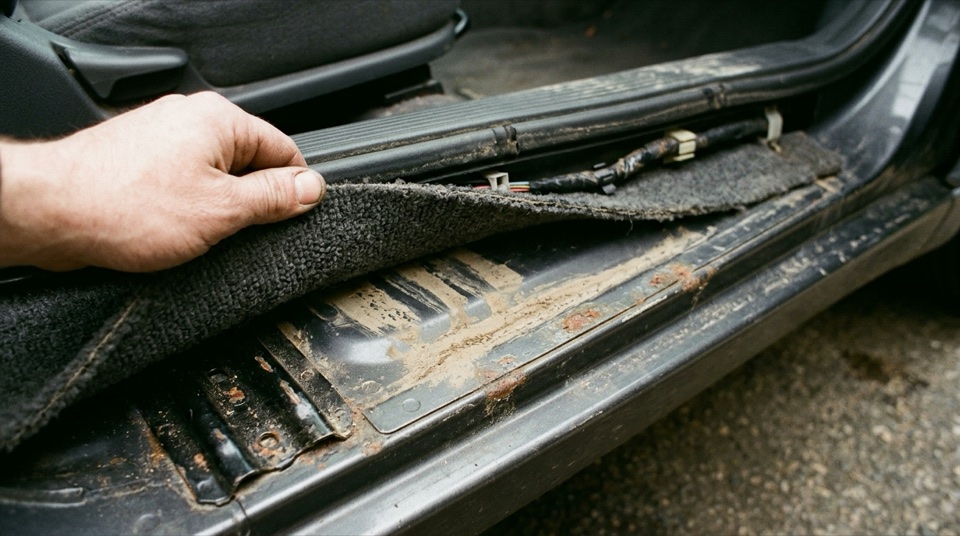
Conversely, a rebuilt car hiding salt-water flood immersion, deployed curtain airbags stuffed with resistors instead of modules, or cut-and-welded frame rails ("clipping") is a severe safety hazard.
- Green-flag Rebuilt candidate: Copart/IAAI photos confirm pure cosmetic theft-recovery, light hail, or single-corner bolt-on bumper/fender damage with ZERO deployed airbags and ZERO frame-pulling.
- Walk-away Rebuilt red flag: Seller refuses to share Copart/IAAI lot number, offers a "freshly titled" Salvage slip claiming you only need $50 at the DMV to register it, or hides flood/biohazard codes.
Financing & insurance reality check before committing
Major national banks and credit unions typically refuse standard auto loans on Rebuilt or Prior Salvage VINs—you will likely need cash or a personal unsecured loan.
On insurance, every state mandates minimum Liability coverage for Rebuilt titles, but GEICO, Progressive, State Farm, and Allstate vary widely on whether they grant Comprehensive or Collision coverage, and any future total-loss payout is discounted sharply below clean KBB retail.
Common questions
Can you drive a Salvage-titled car home in the US?
No. A Salvage title denotes an unroadworthy vehicle whose registration is suspended until repaired, photographed, documented with parts receipts, and re-inspected by the state to receive a Rebuilt / Prior Salvage title.
How much cheaper should a Rebuilt title car be?
Most experienced US appraisers discount a cleanly repaired, well-documented Rebuilt vehicle 25% to 40% below an equivalent clean-title car—bigger discounts apply if airbags deployed or frame straightening was needed.
Can a Rebuilt brand ever be removed back to Clean?
Legally, never. NMVTIS preserves brand history permanently across all 50 states. Anyone selling a former salvage wreck with a brand-new Clean title from another state committed illegal title washing.